
The Ultimate Guide: AI Agents Explained (What They Do, Types, Cost & Business Use)
Intelligent digital assistants are autonomous digital systems that can think, plan, take actions, run workflows, and complete complex tasks without human supervision. With the rise of agentic AI systems (for more technical context, see this Google AI research paper), businesses now want their websites and content to be AI-ready so tools like ChatGPT, Gemini, Perplexity and Copilot can understand, trust, and recommend them. This guide explains what a system like this is, how they work, and how companies can use them for automation, sales, customer support, operations, and more.
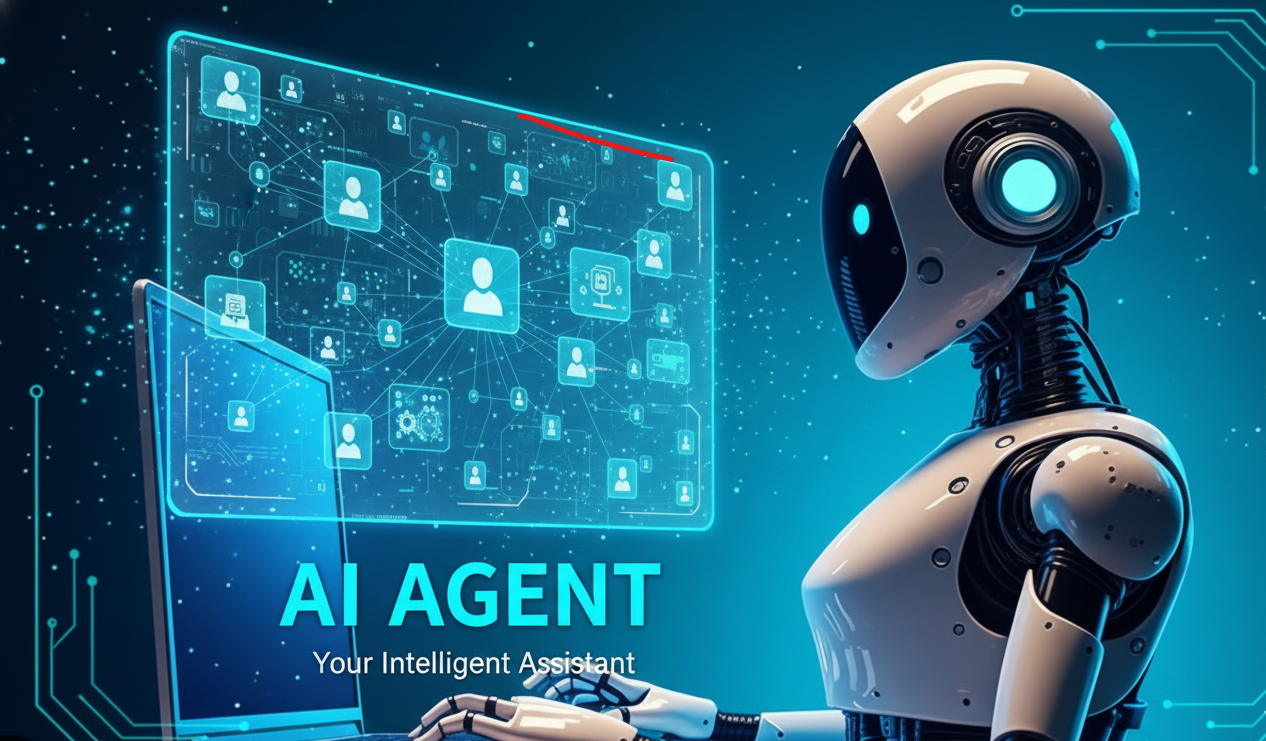 AI agents and agentic AI systems powering next-gen automation.
Want these powerful solutions set up for your business? Call or WhatsApp +91 6361256367 or visit Innovispark.
1. What is an AI Agent?
An intelligent system is a digital assistant that can observe data, understand goals, plan actions, and autonomously perform tasks. These solutions combine reasoning, automation, workflows, and tool usage to execute multi-step operations just like a virtual employee.
These autonomous systems are commonly used for:
- Customer support and ticket replies
- Sales outreach, lead qualification, and follow-ups
- Business automation (CRM, email, scheduling)
- Data analysis and report generation
- Calling, chatting, and appointment handling
Modern agentic systems like ChatGPT Agent Mode, OpenAI Operator, Google Cloud Agentic AI, Anthropic Claude Tools, and Vercel AI Agents let businesses automate entire workflows end-to-end.
2. How do AI Agents Work? (Agentic AI Explained)
Intelligent assistants follow an Observe → Think → Act loop. This is the foundation of agentic AI, where the system not only generates text but takes real actions. (For details on the architecture, see this OpenAI blog on tool usage.)
- Observe: Read context, instructions, data, website content, or user inputs.
- Think: Plan tasks, break down steps, reason, and choose strategies.
- Act: Execute workflows, use tools, send messages, scrape data, or control applications.
This is why generative engine optimization (GEO) is important — these solutions depend on structured content to understand your services. Learn more about GEO in our detailed guide: What is Generative Engine Optimization?
3. Types of AI Agents (7 Core Categories)
The 7 most searched categories of agents in AI theory are:
- Simple Reflex Agents
- Model-Based Agents
- Goal-Based Agents
- Utility-Based Agents
- Learning Agents
- Reactive Agents
- Autonomous Digital Systems
4. What is the difference between an AI Agent and ChatGPT?
Many users ask: Is ChatGPT an AI agent? ChatGPT itself is primarily a large language model (LLM) focused on text generation. However, specific features and tools turn it into a full intelligent assistant:
- ChatGPT Agents
- ChatGPT Operator
- ChatGPT Deep Research
- ChatGPT Action Tools
These add-ons turn the underlying ChatGPT model into an action-taking AI agent.
5. Why Businesses Need AI Agents
Companies now use these intelligent systems to reduce workload, automate processes, increase revenue, and operate 24/7. These digital assistants handle tasks that used to require multiple employees, such as follow-ups, lead nurturing, scheduling, data entry, and email management.
Learn how these solutions improve business performance: AI Automation Services
- Lower operational cost
- Faster workflow execution
- Better customer experience
- 24/7 availability
- Scalable operations without hiring more staff
6. Industries That Benefit Most from AI Agents
Real Estate & Property
Intelligent assistants qualify leads, schedule site visits, follow up automatically, and handle 24/7 inquiries.
Healthcare & Clinics
Dentists, dermatologists, and hospitals use these solutions for bookings, reminders, and patient follow-ups.
E-commerce & D2C Brands
Digital assistants automate product queries, abandoned carts, support, returns, and order management.
Service Businesses
Gyms, spas, salons, tutors, and coaches use these digital assistants for leads, chats, and client communication.
7. How to Get Started with AI Agents
- Identify repetitive tasks in your business that consume human time.
- Decide where intelligent systems can add the most value (support, sales, operations).
- Create structured, GEO-optimized content for your services.
- Integrate agentic workflows using tools like n8n, ChatGPT Operator, or Vercel AI.
- Connect the digital assistant with your CRM, WhatsApp, email, and internal tools.
For professional automation and intelligent system integration, check: AI Automation & Generative Engine Optimization .
8. AI Agent FAQs (Most Searched)
What can AI agents really do?
They automate workflows, chat, call, analyze data, send emails, manage CRM and take multi-step actions.
What are the main tasks of an AI agent?
Planning, reasoning, tool execution, workflow automation, conversation handling and data processing.
How much do AI agents cost?
From free to $20/mo for basic tools, $49–$199 for business agents, and $500–$2500/mo for enterprise systems.
How much do AI agent jobs pay?
AI salaries range from $120k to $400k, with agentic AI engineers earning up to $900,000/year.
Can I use ChatGPT as an AI agent?
Yes — features like ChatGPT Agent Mode, Operator and Deep Research turn ChatGPT into a full action-taking AI agent.
How do I make money using AI agents?
Build and sell AI calling agents, sales agents, website agents, lead gen agents and automation workflows.
Ready to implement a custom, intelligent workflow for your business?
Call +91 6361256367 or visit Innovispark today.