

AI Solutions for Business Operations: How Companies Solve Everyday Problems
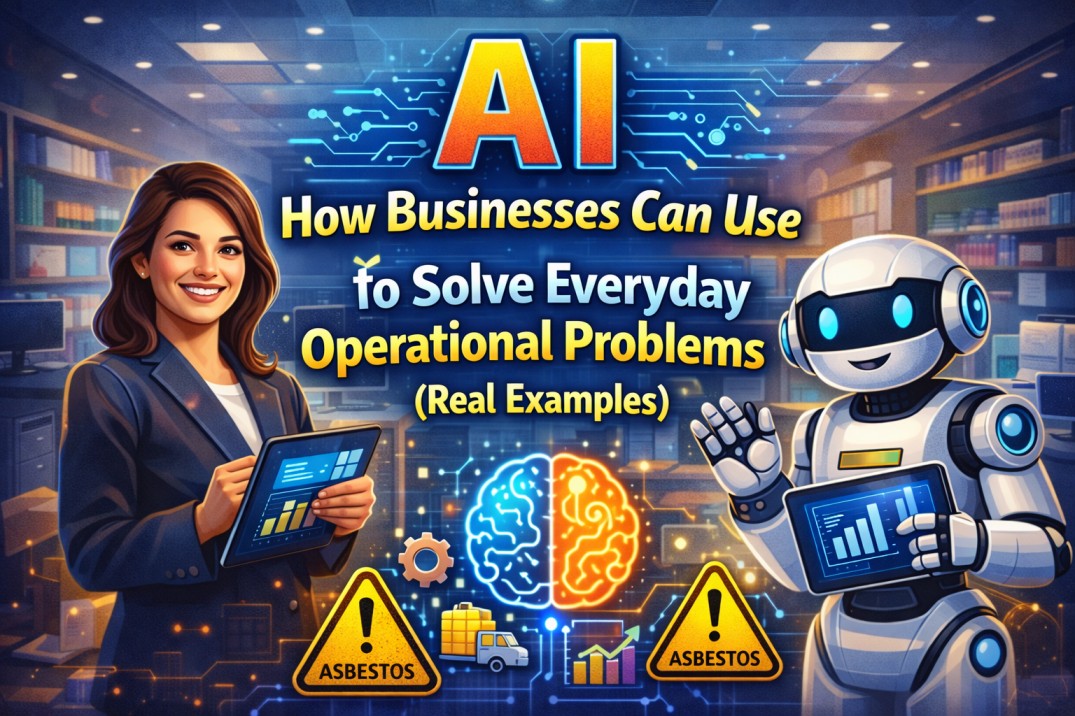
Running a business today isn’t just about growth—it’s about handling everyday operational friction. Missed follow-ups, manual reporting, slow approvals, inconsistent customer experiences, and rising costs quietly drain time and profit. This is where AI solutions for business operations are no longer “nice to have.” They are becoming essential.
According to a report by IBM, businesses that integrate AI into their workflows see a significant reduction in operational costs. Unlike hype-driven content, this guide focuses on real, practical AI examples for business, showing how companies—especially small and mid-sized ones—use AI to solve daily operational problems without rebuilding their entire organization.

Table of Contents
Why Businesses Need AI Solutions for Daily Operations
Every business, regardless of size, faces the same invisible challenges:
- Too many repetitive tasks consuming valuable hours.
- Human error in routine processes like data entry.
- Delayed decisions due to scattered or unorganized data.
- Teams spending time on work that doesn’t directly grow revenue.
Traditional automation helped, but AI takes it further by learning patterns, predicting outcomes, and improving workflows automatically. That’s why AI solutions for business operations are now used not just by enterprises, but by service companies, retailers, and agencies.
Practical AI Use Cases for Small Businesses
Small businesses benefit the most from AI because they often lack large teams but still face complex operations. Here are practical use cases working today:
1. Customer Support Without Hiring More Staff
AI chat systems handle FAQs, order status queries, and appointment scheduling. Instead of answering the same questions repeatedly, teams intervene only when needed. Platforms like HubSpot AI allow businesses to deploy these agents quickly, leading to faster customer response and lower support costs.
2. Lead Management and Follow-Ups
Many businesses lose leads not because of poor marketing—but because no one follows up consistently. AI can automatically respond to new leads, qualify prospects, and route hot leads to sales teams. This logic is crucial when you want to improve sales in a retail store or online business, where automation converts interest into revenue without extra manpower.
3. Internal Task Management
AI monitors workflows and flags missed deadlines or bottlenecks. Instead of managers chasing updates, AI surfaces problems proactively, ensuring better execution and fewer surprises.
How Businesses Use AI Automation to Improve Efficiency
Understanding how businesses use AI automation means looking beyond tools and focusing on workflows.
AI in Administrative Operations
AI automates invoice processing, expense categorization, and report generation. This alone can free up 10–20 hours per employee per month.
AI in Marketing Operations
Marketing teams use AI to generate campaign drafts, analyze performance data, and optimize messaging. This includes using AI prompts for creative design. Interestingly, the same AI logic used to streamline business data can also be applied creatively, such as learning how to draw bubble graffiti letters for unique branding assets.
AI in Decision Support
AI helps leaders forecast demand and identify cost leaks. Instead of static dashboards, AI provides contextual insights that drive high-impact actions.
Real Examples of AI Improving Business Efficiency
Let’s look at real examples of AI to improve business efficiency, not theory.
Example 1: Retail Operations
AI analyzes purchase patterns and inventory movement to prevent overstocking and stockouts, directly improving margins.
Example 2: Facilities and Compliance Management
Many organizations overlook operational risk until it becomes expensive. AI helps by flagging compliance gaps and monitoring asset conditions. For instance, facility managers use specific checklists to determine safety risks, similar to how to tell if ceiling tiles have asbestos, ensuring legal compliance and safety are handled proactively.
Example 3: Finance and Cost Control
AI detects duplicate payments and unusual spending patterns. Instead of monthly surprises, finance teams get real-time alerts regarding budget overruns. Tools like Zapier can connect these AI alerts directly to Slack or Microsoft Teams.
AI Solutions for Business Operations vs Traditional Automation
This difference is why AI solutions scale better as businesses grow.
| Feature | Traditional Automation | AI Solutions |
|---|---|---|
| Logic | Rule-based | Learns patterns |
| Flexibility | Static workflows | Adaptive workflows |
| Maintenance | Needs frequent updates | Improves over time |
| Output | Limited insights | Predictive insights |
Getting Started With Practical AI Examples for Business
If you’re new to AI, don’t start with “AI everywhere.” Start with one operational pain point.
- Identify Repetitive Work: Ask what tasks repeat daily and cause delays.
- Choose One AI Use Case: Such as AI customer support or automated reporting.
- Integrate With Existing Tools: Connect AI to your CRM or accounting software to avoid disruption.
- Scale Gradually: Once one workflow works, expand. This systematic approach effectively utilizes Actionable AI to transform simple workflows into long-term wealth.
Common Myths About AI in Business Operations
Research by McKinsey shows that adoption is growing, yet myths persist:
- Myth: “AI is only for large companies.”
Fact: SMBs gain the most because AI replaces manual effort they cannot afford to hire for. - Myth: “AI replaces employees.”
Fact: AI removes low-value tasks so people focus on judgment and strategy. - Myth: “AI is too complex to implement.”
Fact: Modern AI tools are often no-code and easier to deploy than traditional software.
Frequently Asked Questions
What are AI solutions for business operations?
They are AI-powered tools and workflows that automate tasks, improve decision-making, and reduce operational inefficiencies across departments like finance, HR, and support.
What are the best AI use cases for small businesses?
Customer support automation, lead management, automated reporting, scheduling, and marketing content generation are among the most effective and accessible use cases.
How do businesses use AI automation daily?
Businesses use AI daily to handle emails, analyze sales data, generate financial reports, respond to customer inquiries instantly, and monitor workflows for bottlenecks.
Can AI really improve business efficiency?
Yes. AI reduces human errors, speeds up processes, and provides deep insights that help teams act faster and smarter, directly impacting the bottom line.
Are practical AI examples useful without technical teams?
Yes. Most modern AI tools are no-code or low-code, designed specifically for non-technical users to implement without needing an IT department.